


'Reflections' at the National Gallery
September 14 2017
Video: National Gallery
Here's a trailer for the National Gallery's forthcoming exhibition, 'Reflections: Van Eyck and the Pre-Raphaelites': Says the gallery's blurb:
Acquired by the National Gallery in 1842, the Arnolfini Portrait informed the Pre-Raphaelites’ belief in empirical observation, their ideas about draughtsmanship, colour and technique, and the ways in which objects in a picture could carry symbolic meaning.
The exhibition will bring together for the first time the 'Arnolfini Portrait' with paintings from the Tate collection and loans from other museums, to explore the ways in which Dante Gabriel Rossetti (1828–1882), Sir John Everett Millais (1829–1896) and William Holman Hunt (1827–1910), among others, were influenced by the painting in their work.
The show runs from 2nd October - 2nd April.
Is this by Rembrandt? (ctd.)
September 13 2017

Picture: National Gallery
Back in 2014 I reported that the leading Rembrandt scholar Ernst van der Wetering had upgraded a painting in the National Gallery to 'Rembrandt', long after it had been downgraded to 'Follower of Rembrandt'. 'Old Man in an Armchair' had been allocated to the National Gallery in 1957, as a Rembrandt, through the Acceptance in Lieu scheme. But it was downgraded in 1969 by the Rembrandt scholar Horst Gerson, a decision followed by the Rembrandt Research Project in its earlier incarnation.
Prof. van der Wetering is now chairman of the Project, and has decided that in his opinion the picture is indeed by Rembrandt. When he announced his decision, the National Gallery held fast to its description as 'Follower of Rembrandt'. Now, however, the Gallery will re-label the picture as 'Probably by Rembrandt', and it is currently on display in the newly re-hung Dutch and Flemish rooms.
For what it's worth, I think this is the right call. 'Probably by' is a much underused term in the attribution game, and we should see it deployed more often. The term began to be used at the National Gallery during the directorship of Sir Nick Penny, replacing the sometimes baffling 'attributed to'.
Incidentally, I learnt this information through Twitter, when the National Gallery's new Dutch and Flemish 1600-1800 curator was taking part in #AskaCurator. Excellent all round.
Waldemar on the NPG's 'Encounter'
September 13 2017

Picture: BG
If you haven't read it, the Great Waldemar's succinct review of the National Portrait Gallery's exhibition, The Encounter, spares no punches:
Not for the first time in my life, as I left the new show at the National Portrait Gallery, I was moved to mutter: “Thank heavens for the Queen.” Once again, Her Majesty had saved the day. Were it not for her loan of a wall full of commanding Holbein drawings from the Royal Collection to the exhibition entitled The Encounter: Drawings from Leonardo to Rembrandt, that exhibition would be a poor event. Short on quality. Short on direction.
It is the fate of the National Portrait Gallery to be searching continuously for angles. Portraiture is, after all, a straightforward affair. Over here you have the artist. Over there you have the sitter. One records the other. And that’s it. Finding inventive ways to present this exchange is, therefore, a museum challenge that encourages much smoking of mirrors.
The problem with the angle attempted by The Encounter is that it isn’t an angle. Every portrait ever produced is the result of an encounter — it’s all a portrait can be. Putting a definite article in front is not enough to give this effort any true purpose or meaning. As for the subtitle, Drawings from Leonardo to Rembrandt, it’s a tease. Neither Leonardo nor Rembrandt is represented here in a significant fashion. If you ignore these directional problems, you are left with a drawing show in which various Old Masters of various levels of talent have been arranged in a string of sections that are supposed to frame telling aspects of Old Master portraiture. But don’t.
Cleaning Gainsborough's 'Blue Boy'
September 13 2017
Video: Huntington.org
Thomas Gainsborough's celebrated 'Blue Boy' has been taken off display at the Huntington art gallery in California ahead of a two year restoration project. Emily Sharpe in The Art Newspaper reports:
Part of the conservation will take place in one of the museum’s public galleries in a special exhibition called Project Blue Boy, due to open in autumn 2018.
According to Christina O’Connell, the senior paintings conservator at the Huntington, recent treatments have focused on adding layers of varnish so the picture could remain on display. This has obscured some details and caused the colours to “appear hazy and dull”.
The Huntington will have a special site dedicated to the project here. THe Blue Boy is now thought by some scholars to show Gainsborough's nephew, Gainsborough Dupont. When the painting was sold to Henry Huntington in 1921 for $728,000 it was the world's most expensive painting. These days, 18th Century British portraiture is not nearly so valuable, relatively. But who knows how long that will last. Fashion and value in the art market are fickle things.
Incidentally, to give you an idea of just how expensive the painting was in real terms in 1921, the seller was the 2nd Duke of Westminster, a man who, as the richest man in Britain, hardly needed the money. But then that side of my family (to whom, incidentally, I am related only genetically, not financially) has always been very canny with money.
Update - a reader writes:
The Blue Boy was not the world’s most expensive painting at the time of its sale. That record was still held by Leonardo’s Benois Madonna, which Nicholas II acquired – in competition with Duveen and American magnates – for $1.5M (£310,000) in 1914. By comparison, The Blue Boy fetched a mere £148,000 in 1921.
The Westminsters must have been short of cash at the time as they also off-loaded – to Huntingdon as well – Gainsborough’s Cottage Door and Reynolds Sarah Siddons as The Tragic Muse, both for around £70,000.
I don't think it was a shortage of cash, rather a certain family Philistinism.
Flemish portraits 1400-1700
September 13 2017

Picture: via Mauritshuis
The Mauritshuis in The Hague has a new exhibition of Flemish portraits on loan from the Royal Museum of Fine Arts in Antwerp, the KMSKA. Says the Mauritshuis website:
The exhibition includes major works by Rogier van der Weyden, Hans Memling, Pieter Pourbus, Peter Paul Rubens and Anthony van Dyck. Remarkably, almost all the sitters can be identified. This is why the exhibition will not only highlight what makes Flemish portraits so special, but also who appears in the pictures and how they wanted to be viewed.
The KMSKA is currently closed for refurbishment, and is planned to reopen in 2019. It has been closed since 2011 - and is further proof that museums should never entirely close for refurbishment, as it's a recipe for delays and a loss of momentum. That said, the KMSKA has been quite good at putting works from its collection on loan elsewhere.
Van Dyck exhibition in Munich
September 13 2017

Picture: Alte Pinakothek, Munich
Exciting news - a major new Van Dyck exhibition is to be held at the Alte Pinakothek in Munich in late 2019. Says the museum's website:
The exhibition, which will also include loans from international museums, creates a multidimensional portrait of Van Dyck, who carved out his own style in his younger years precisely through his confrontation with the almost overpowering artistic persona of Peter Paul Rubens.
It will run from 1.10.19 to 1.2.20, and AHN has already booked tickets.
New museums in Bishop Auckland
September 11 2017

Picture: Guardian
In The Guardian, Maev Kennedy reports on a new museum in Bishop Auckland devoted to paintings of and by miners:
A unique collection of paintings by Durham miners, many made by men who spent their working lives underground and their nights painting on kitchen tables, in attics or garden sheds, will go on display in the first museum in the UK dedicated to such art.
The museum is being created in a former bank building on the marketplace in Bishop Auckland. It includes works by Norman Cornish, the most famous of the group, who left the pits at the urging of his wife to become a full-time artist and spent the rest of his life recording the small streets, shops and people of Spennymoor, where his studio is preserved in an exhibition at the town hall.
More here. This news comes on top of the exciting plans for another museum in Bishop Auckland backed by the financier Jonathan Ruffer.
Fire at the Hermitage!
September 11 2017
Video: Euronews
A fire broke out in the Hermitage last week. It was in the basement, and there were fears that some of the museum's famous cats had been killed. But according to The Art Newspaper, the cats only sustainted injuries. More here.
New Old Masters
September 11 2017

Picture: Freddy Fabris
I'm late to the appreciation of these photographic re-interpretations of Old Masters by US photographer Freddy Fabris. He posed a group of car mechanics as works by Rembrandt (as above), Leonardo, and Michelangelo. More here.
Airport art
September 11 2017
Video: Rijksmuseum
When it comes to pride in Old Masters, no country does it better than the Dutch. They're happy to celebrate their Golden age artistic heritage, and don't feel embarrassed about art that is 'old'. At Amsterdam's Schiphol airport, for example, you'll regularly see adverts using Rembrandt's face, or, as above, a baggage belt wtih a Vermeer on it.
And now there's a new Rijksmuseum gallery in the airport - open 24 hours a day! Says the Rijksmuseum:
Anyone flying in or out is welcome to stop off here to enjoy the artistic glories of the Dutch Golden Age. Ten paintings from the Rijksmuseum collection will be on show, with landscapes, seascapes, portraits and floral still lifes by Dutch masters such as Jan van Goyen, Willem van de Velde the Younger, Abraham Mignon and Michiel van Mierevelt. Travellers can view the paintings at any time, day or night, free of charge.
I cannot imagine a British gallery or airport ever doing this.
More here.
Update - I know the image in the screen grab is a Liotard, it's even written next to it! Watch the video and you'll see a Vermeer come around on the belt.
Eike Schmidt goes to the KHM in Vienna
September 11 2017

Picture: via Apollo
Surprising news that Eike Schmidt, who joined the Uffizi as director in late 2015 is to become the new director of the Kunsthistorisches Museum in Vienna. He will take up his new post in 2019. Reports Apollo:
Schmidt will replace Sabine Haag, who has been at the helm of the Kunsthistorisches Museum since 2009. The news was announced this morning by the Austrian culture minister Thomas Drozda at a press conference in Vienna, at which Schmidt stressed the need for the KHM to embrace digital opportunities to appeal to a wider international audience.
Schmidt’s contract at the Viennese museum will initially be for five years. At the Uffizi, he has gained a reputation for bold modernisation: renovating and redisplaying major galleries (including those dedicated to Botticelli), reorganising the curatorial structure, introducing a new pricing system for museum tickets, and expanding the scope of the exhibition programme at both the Uffizi and Palazzo Pitti.
I hope that in the next two years Schmidt can complete some of his reforms at the Uffizi. When I visited earlier this year, it was probably the worst experience of a major gallery I have had as a visitor. Getting in is of course the hard part, and while I appreciate that there is great demand for tickets, the way entry is managed does not exactly help. I was given two tickets, both of which had to be scanned and collected by different people, each time creating bottlenecks in the queue to get in. And then, just when you thought you had cleared all the hurdles, and have climbed the stairs to the main galleries, you then have to have your ticket checked again! Is it a massive job creation scheme?
The collection is of course worth the wait. But don't bet on seeing anything other than Italian art. I asked to see the Flemish galleries, and was told that these are only sometimes open on Tuesday. My advice is to go to the Palazzo Pitti instead.
Still, there was a curious and welcome contrast when we went to film in the Uffizi for Britain's Lost Masterpieces. The staff could not have been more helpful, welcoming and relaxed about us filming the paintings. Much of the time filming in galleries involves 'computer says no' over zealousness from staff, not to mention eye-watering fees. British galleries are some of the worst offenders.
Bowie's Tintoretto at the Rubenshuis (ctd.)
September 11 2017
Video: Rubenshuis Museum
I have reported before on the loan of David Bowie's Tintoretto to the Rubenshuis Museum in Antwerp, one of my favourite places. Above is an English version of a video made by the museum to publicise the loan. Excellent, don't you think?
Stolen de Kooning returns to US museum (ctd.)
September 11 2017

Picture: New York Times
I mentioned recently the case of a stolen de Kooning painting that had been returned to the University of Arizona. Now police are trying to figure out how it was stolen in the first place, and according to William K. Rashbaum in the New York Times they are trying to determine if:
[...] the heist was engineered by a retired New York City schoolteacher — something of a renaissance man — who donned women’s clothing and took his son along as his accomplice, and then hung the masterwork in the bedroom of his own rural New Mexico home, where it remained.
In other words, they are examining whether he stole a painting now valued at in excess of $100 million simply so he could enjoy it.
The teacher, Jerome Alter, and his wife, Rita, both died at 81, he in 2012 and she earlier this summer.
More here.
Antwerp's masterpieces free online!
September 11 2017

Picture: Rubenshuis Museum/City of Antwerp
I have just discovered that the city of Antwerp has not only put good high-resolution photos of their masterpieces online (inlduing the above Rubens self-portrait) but has made them all free to reproduce, in any context. Amazing! Bravo Antwerp - you can explore the databse for yourself here.
Fakes, fakes everywhere? (ctd.)
September 11 2017

Picture: via TAN
The long-running Knoedler scandal has drawn to a close for Anne Freedman, who was director of the New York gallery when it sold $70m worth of fakes. Freedman has settled the last case against her, and continues to deny suspecting any of the pictures were fake. She has said:
“I was a perfect mark, so I’m told, and my research helped them figure out their own scheme,” describing those who conned her as “exquisitely conspiratorial wizards”.
That's as may be. But the fakers were not wizard enough to fool a fairly basic scientific analysis of the paintings.
Apologies (ctd.)
September 11 2017
Many apologies about the lack of news. It took us a few days to see off the unwanted attentions of a hacker, who had somehow been able to control that part of the site which points our browsers hither thither. So while AHN itself never disappeared, everyone was diverted to a random advertising site.
At the end of last week I was in London filming some final sequences for Britain's Lost Masterpieces. More on that soon.
And finally I will be able to get back to AHN later today. There's lots of news to catch up on, so standby! And thanks for your patience.
Hacked!
August 30 2017
Someone seems to be hacking into this site periodically. Attempting to resolve...
National Gallery acquires £11.6m Bellotto (ctd.)
August 28 2017

Picture: National Gallery
I wrote last week about the National Gallery’s successful attempt to acquire Bellotto’s View of Koenigstein Fortress from the North for £11.6m. I’ve now learnt that the Gallery’s fundraising effort was much more challenging (and commendable) than usual. The case highlights why we need to reform the arrangements surrounding the export and taxation of important works of art in Britain. (Warning, this post gets a bit technical.)
First, a quick recap. The painting belonged to the collection of the Earls of Derby. It was a ‘conditionally exempt’ painting, which meant that it had been exempted from death duties on the understanding that it wasn’t sold, and was accessible to the public for a number of days a year. The conditional exemption scheme is intended to help keep historic collections of pre-eminent artworks together. So if you inherit a collection of important pictures, which may have hung in the same setting for three centuries, you can keep them on your walls for you and others to enjoy. But if you ever decide to sell one of the pictures, then you are taxed the full rate.
When a conditionally exempt work is to be sold, the owner is supposed to notify the government, through the Arts Council, that they intend to sell it. A guide price is suggested. This period, usually of three months, is intended to allow any interested museum to attempt to buy the work, and also to qualify for various tax incentives, including something known as the 'douceur'. This allows the museum to benefit from a discount on the painting, because the Treasury foregoes the tax due. In most cases, this equates to a 30% discount, that being the current rate of death duties plus the 'douceur' (but sometimes the discount can be as much as 80%). So the seller settles their tax liability, the museum gets a discount, and the taxpayer subsidises the museum’s acquisition. Everyone’s a winner.
But recent cases, including the Bellotto, have shown that there are a number of areas which need to be reviewed in this scheme. Strangely, the requirement to notify the government of an intention to sell is not compulsory. This means that important artworks can be sold under the noses of UK museums, who not only lose time to plan a fundraising campaign, but also lose the opportunity to benefit from the tax breaks. An added complication is when these important artworks are sold to an overseas buyer, bringing the export licence system into play.
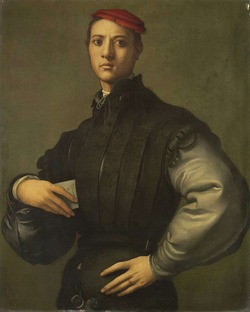
We saw this with the Pontormo Portrait of a Man (above) sold in 2015 to a US collector for £30m while it was on loan to the National Gallery in London. In this case, the seller of the Pontormo (the Earl of Caledon, or his trustees) completed the sale to the US collector (Tom Hill), and therefore paid the tax to the Treasury. Furthermore, Mr Hill paid for the picture before an export licence was granted, when normally overseas buyers agree to buy important pictures in the UK subject to an export licence being granted. That way, the overseas buyer doesn’t take the risk of paying £xm for a painting which might then be held up in the system for up to a year as a British institution tries to ‘save’ it. At the time, Francis Russell of Christie’s (who had discovered the Pontormo) said (in The Guardian):
“No doubt the picture was sold furtively as the purchaser wished to ensure that it couldn’t be bought in a tax-efficient way by an institution here.”
In the case of the Bellotto, the sale (this time to a Chinese buyer, in a private treaty sale through Christie’s) was also completed prior to an export licence being granted. The tax was settled. And so the National Gallery had to raise the full £11.6m asking price, as they were now transacting with the new Chinese owner.
When, last year, the National Gallery succeeded in raising the £30m necessary to try and buy the Pontormo from Mr Hill, the Treasury agreed to effectively refund the £19m of tax that the Earl of Caledon (or his trustees) had paid. However, that was a special one-off case, and it has been confirmed to me that this option was not available to the National Gallery for the Bellotto.
Now, I make no suggestion here that the Earl of Derby (or his trustees) were under any obligation to try and structure the sale of their property so as to maximise the ability of a UK museum to try and buy it. They were made an offer for the Bellotto, and accepted it (long after making the necessary notification of intention to sell in 2014) which is perfectly proper. It was not up to the Earl of Derby to suggest that the Chinese buyer shouldn’t pay for the painting before an export licence was granted.
I think the point here is that a museum's ability to save pictures for the nation should not be at the mercy of the decisions made by vendors, the trade, and buyers. Regular readers will know that I've long argued for the rights of the owners of paintings like this. But the way the system is currently designed creates an unnecessary point of conflict between museums, the trade, private owners, and the government. Therefore, I would suggest we need to reform the system to achieve the following:
- First, the ability of a museum to qualify for an effective discount (through tax foregone by the Treasury) shouldn’t really depend on which point in the transaction the museum gets involved. If the Treasury felt able to refund the tax in the Pontormo case, they should be able to do it for all similar cases. This is just a matter of accounting.
- Second, the ‘notification of intention to sell’ should be made compulsory.
- Third, it is sometimes suggested that the ‘guide price’ at the point of a notification of intention to sell is set artificially high, to discourage museum bids (I should stress this was not the case with the Bellotto). Therefore, I would make an independent, third-party assessment of value a part of the compulsory notification of intention to sell process. Remember, these conditionally exempt artworks are already effectively part-owned by the state, and it is not unreasonable for the state (or state-owned museums) to play a slightly more pro-active role in their sale.
- Fourth, as AHN has repeatedly suggested in the past, there should be a greater sanction for those overseas buyers who refuse to accept a UK museum’s matching offer.
Finally, UK museums should not always leave these things so late! If a museum sees a painting and really thinks it is worthy of their collection, it doesn’t have to wait until there is a threat of export to acquire it. I suspect that in the vast majority of cases, their acquisitions will be cheaper.


British university art collections
August 28 2017

Picture: Burlington
The latest edition of The Burlington Magazine draws attention, in its editorial, to the excellence and value of Britain's university museums. The magazine has compiled a survey of new acquisitions by these institutions (excluding the major ones like Oxford and Cambridge). The works collected are, says the magazine, overwhelmingly 20th C or contemporary, but this is not surprising as, 'most of these museums, like their universities, are creations of the past century.'
More surprising is the fact that many universities don't make enough effort to use their collections when it comes to teaching:
It is dispiriting that so few departments of art history use the resources of their university’s collections in any systematic way. The Whitworth shows what can be done: in 2016–17 undergraduates and graduates of the Department of Art History and Visual Studies assisted with the exhibition Marcantonio Raimondi, Raphael and the Image Multiplied,1 and the museum’s curators have for forty years taught on the University’s MA in Art Gallery and Museum Studies. Elsewhere, curators reported to us that the art history courses in their universities failed to encourage the close involvement with objects that a museum offers. This disconnection is reflected in funding. In 2016 a funding review by the Higher Education Funding Council for England (HEFCE) resulted in an annual investment for higher education museums, set for 2017–18 at £10.7 million. Almost four-fifths of this (£8.5 million) was allocated to just four universities – London, Oxford, Cambridge and Manchester. Only five of the museums we contacted for this Supplement receive HEFCE funding – the Barber, the Whitworth, the Sainsbury Centre, the Stanley & Audrey Burton Gallery at Leeds and the Hatton Gallery at Newcastle.
As AHN has said before, much of this is due to the object-phobic way in which much art history is taught at universities. It's amazing really to think that this disconnect between academic art history and museum-based art history is still so pronounced.
Elsewhere in the new Burlington there are articles on Carlo Maratti, Paula Modersohn-Becker, and Paul Gauguin.
