


Agnews to re-open
March 4 2014

Picture: Look and Learn
Great news that Agnews, one of the most venerable Old Master dealers in the world, is to re-open. The company has been bought by a new owner, reports the Telegraph:
Barely a year after the 195-year-old London gallery Agnew’s closed down, it is to reopen under new ownership. Backed by Boston Old Master collector and investor Cliff Schorer, Agnew’s is to be revived, with Old Master dealer Anthony Crichton-Stuart at the helm.
Crichton-Stuart was previously head of Old Master paintings at Christie’s in New York, and subsequently a director of Noortman Master Paintings, an art dealing subsidiary of Sotheby’s that also closed down last year. When Agnew’s closed, outgoing chairman Julian Agnew kept the company’s name, some remaining stock, and a valuable library and archive, all of which has now been sold to the new owners. “Agnew’s is more than a name,” said Crichton-Stuart, alluding to the value of prestige, without revealing its price. “It represents one of the most successful art dealing businesses in history.”
Update - a reader writes with news of the archive:
Very interesting news about the sale and revival of Agnew's, but the wonderful Agnew's archive is not part of the transaction. It has actually been (or is in the process of being) acquired by the National Gallery. The University of Manchester and the National Gallery will shortly announce a new PhD studentship to work on the archive. Even better news for students of the history of the market and collecting.
Update II - it's official, the NG just announced the acquisition of the archive for £240,000:
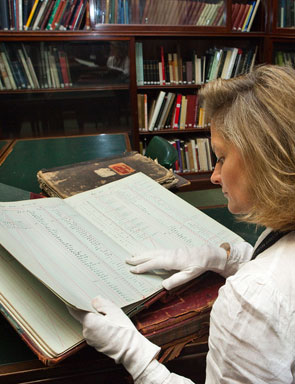
The National Gallery has acquired the archive of art dealers Thomas Agnew & Sons Ltd following the firm’s decision to close its Albemarle Street gallery in 2013. The archive, which dates back to the 1850s, consists of detailed stockbooks, daybooks, diaries and huge leather-bound account ledgers that give unprecedented insight into the activity of one of the world’s most important international art dealers. It complements the National Gallery’s own rich archive and establishes the Gallery as a centre of research for the study of collecting, the art market, taste and provenance. Researchers will benefit from improved access to an outstanding and little-studied collection spanning more than 150 years of history.
Agnew’s archive provides a remarkably detailed record of the activities of the firm, which during its history has had branches in London, Manchester, Liverpool, Paris, New York and Berlin. It includes the records of famous paintings that have passed through Agnew’s, including Velázquez’s ‘Rokeby Venus’ and Bellini’s Feast of the Gods. It also holds information about the company’s involvement with major collectors from around the world. Exceptionally, Agnew’s has remained a family firm from its inception and the archive includes items of a more personal or immediate nature, such as Victorian diaries of overseas trips. Letters and digital information will complete the record through the 20th century up to the end of 2013, the later material being transferred to the National Gallery in stages over the next three decades.
The archive was offered at a discounted price of £240,000, for which sum it was generously purchased and donated to the Gallery by the National Gallery Trust.
Julian Agnew said on behalf of Agnew’s, “I am delighted that our fascinating archive has found such a prestigious permanent home, where the records of the firm and of its influence on the history of taste and collecting will be available to both scholars and the general public.”
Nicholas Penny, Director of the National Gallery, said, “Agnew’s has been at the centre of the art trade for almost 200 years and importantly during the late 19th century and early 20th century when major shifts in collections between the UK and USA were taking place. As the largest and most influential dealer of its age, the information held within the archive is of international significance and has outstanding research value.”
The addition of Agnew’s archive to the National Gallery Research Centre is significant in that it is the first time the Gallery has collected an archive that is not closely bound to its own history. The Gallery will catalogue the archive, and this is expected to be completed within two years. However, the Gallery aims to make the archive as accessible as possible during that time.
Update III - the National Gallery have released the below photo. White gloves! These are the worst things you can use to handle archives. It makes it more likely to rip the paper, as you become clumsy. Clean hands please NG!
That $7 Renoir (ctd.)
March 4 2014

Picture: AP
The saga of the Renoir found for $7 in a US flea market, but which turned out to have been stolen from the Baltimore Museum of Art, is coming to an end, with news that the picture will soon go on public display in the city. More here.
Salvator Mundi 'sold' - official
March 4 2014

Picture: Robert Simon Fine Art/Tim Nighswander
The New York Times reveals that the newly discovered Salvator Mundi by Leonard has been sold for in excess of $75m:
A Leonardo da Vinci painting discovered by a dealer at an American estate sale was sold last year in a private transaction for more than $75 million.
The painting, Leonardo’s oil-on-panel “Salvator Mundi,” showing Christ half-length with a crystal orb in his left hand, had been owned by a consortium that included the New York art traders Alexander Parish and Robert Simon.
The heavily restored painting, dating from about 1500, was bought by an unidentified collector for between $75 million and $80 million in May 2013, in a private sale brokered by Sotheby’s. The details of the purchase have remained locked in confidentiality clauses until they were revealed this week by trade insiders, such as the London dealer Anthony Crichton-Stuart.
Regular AHN readers will of course have known this news since I revealed it exclusively in May last year.
Update - more reflection on the sale, and also that of the Van Dyck self-portrait, in the New York Times here.
Is art history just for poshos?
March 4 2014
No, says teacher Caroline Osborne, who is bravely trying to get more in the state sector to study art history. More here in The Guardian, and here in Apollo.
Update - in his Guardian blog on the subject of poshness and art appreciation, Jonathan Jones writes that:
[...] these days you just aren't posh if you can't talk the talk about contemporary art.
As regular readers will know, contemporary artspeak makes my brain hurt. Ergo, The Guardian, of all places, has confirmed that I am not posh. Hurrah.
Pictures re-united at Osterley Park
March 4 2014
Video: National Trust
I'm looking forward to this greatly - a Osterley Park the National Trust have re-united the house with some of the great pictures in the Jersey Collection (kindly lent by the Earl of Jersey). In the above video, the NT's new curator of pictures, David Taylor, has an amusing take on the difference between Van Dyck and Dobson. The former artist, alas, is not returning to Osterley - at least not yet. The Van Dyck self-portrait which the NPG is trying to buy at the moment was sold by the Earl of Jersey in 2009.
More here in the Guardian.
Apologies (ctd.)
March 3 2014
I'm at home today, and manfully trying to update the blog. But BT Broadband has other ideas...
Photographing 'David'
March 2 2014

Picture: The Florentine
Good news - another gallery is giving up the fight to ban photography. From The Florentine:
Attempts to discreetly snap photos of Michelangelo’s David may no longer have to stay hidden. The Accademia Gallery is taking concrete steps toward relaxing its rules regarding photos inside the museum.
At the beginning of 2014, the Accademia conducted a two-week experiment, allowing visitors to use their cameras, smartphones and tablets as they pleased. Flash photography was still forbidden and visitors were reminded that their images were restricted to personal use.
Museum director Angelo Tartuferi explained, ‘Over the course of this experiment, we noticed many significant, positive consequences from this relaxation of the rules; museum visitors, tour guides, and, most importantly, our security staff took note of these as well.’
In the past, members of security staff have fought a losing battle trying to prevent visitors from taking pictures. There have even been public clashes between security officials and visitors who continue to photograph David after being instructed to stop.
According to the museum officials, the logic behind this initiative is that there is little harm in allowing tourists to take home a memento of their museum visit, or share artistic treasures with friends on social media. The pending change will still require visitors to be respectful and cautious in their approach to the artworks. Accademia officials have sent a letter to the Department of Cultural Heritage outlining the idea, but are currently awaiting approval.
Update - the Grumpy Art Historian doesn't like it.
Update II - Aaron Flack at Getty Iris says that 'Instagram is keeping art alive':
In fact, according to a recent Pew Institute survey, 81% of museums and galleries believe the internet and social media play a crucial role in supporting the arts. After decades of scaring potential supporters away (and missing out on the youngest generation completely) with endless snail mail and telephone marketing, smartphones and social media are providing museums like New York's Metropolitan Museum of Art and Los Angeles' Getty Museum — each of which boast millions of Facebook, Twitter, Pinterest, and Instagram followers — a second chance at community-building.
Science and attributions - caution urged
March 2 2014
Good interview here in the Guardian with Prof. Martin Kemp (a world authority on Leonardo) about how dodgy science is sometimes used to support even dodgier attributions.
Update - a reader writes:
[...] the text makes no mention of La Bella Principessa or the wonderfully precise science (of spectral, spatial, spiritual and other type of analysis of fingerprints found in obscure places on 'old' paintings) championed by Peter Biro [who found 'Leonardo's fingerprint' on La Bella Principessa.
After all that...
March 2 2014

Picture: New Statesman
The latest New Statesman has got the wrong Bonnie Prince...
Thanks...
February 24 2014

Picture: BG
...for all your kind emails and Tweets following my BBC Culture Show programme on the weekend. It seems to have gone down quite well. In Scotland at least.
I will soon post a much more detailed note on the picture, as there was lots of information we sadly had to leave out of the film.
There may not be much more from me here today though, as I've got quite a lot to catch up on.
If you missed the show, here it is on iPlayer! And in case anyone's interested, here's a link to my 2008 article in the British Art Journal on why the La Tour pastel is Prince Henry.
Update - still catching up on things today, Tuesday, apologies...
Update II - I give up. Have had so much to do, and so much kind feedback, that the blog will now have to wait till tomorrow I fear. Sorry!
Update III - a reader Tweets:
please upload a new blog post, I'm getting withdrawal symptoms, thanks
It seems to have become a week off. Oops...
Update IV - nice review of the programme in The Spectator here.
Newly discovered portrait of Bonnie Prince Charlie
February 21 2014

Picture: BG
Here's the picture I've been dying to tell you about for months, and the subject of my Culture Show programme tomorrow; the only portrait of Bonnie Prince Charlie to have been painted from life in Britain, by the great Allan Ramsay. More from me later, but in the meantime here's a nice piece in The Guardian about it.
Museum swapshop in Washington
February 20 2014

Picture: Wikipedia
Here's a surprise, the Corcoran Gallery in Washington, one of America's finest, will be taken over by the US National Gallery of Art. The collection will be broken up, with perhaps as much as half of it (which is primarily 19th Century art) being distributed around the rest of the country. More here in the Washington Post, and here in the New York Times, which reports:
“This arrangement turns two great collections into one extraordinary collection,” said Earl A. Powell III, director of the National Gallery. “The Corcoran will still have its own identity: a great facility with a distinguished building. It’s a way of keeping the Corcoran memory alive.”
If the plan is approved by the boards in April, it will put an end to years of money trouble for the Corcoran, which had some 103,000 visitors last year. The Corcoran currently runs a $2,071,129 deficit, has $2,787,690 of bank debt and an endowment that has shrunk over the last decade to only $18 million. It also has a $44 million acquisitions fund. Unlike the National Gallery, which does not charge for admissions, the Corcoran is one of the few museums in Washington that does ($10 for adults), a practice that has hampered its ability to attract a strong visitorship. If the plan is implemented, all exhibitions in its original home will be free to the public.
Over the years, the Corcoran has pursued a number of efforts to shore up its finances, including the sale of real estate. In 2010, it sold the Randall School, a former public school in Southwest Washington, where it once planned to relocate the college, for $6.5 million to the Miami collectors Donald and Mera Rubell and the developer Telesis. It also tried to sell the college’s current building in Georgetown, but the deal fell through. Last year, it announced the possibility of relocating from its historic building on 17th Street, but after a hailstorm of criticism its board changed its mind, saying the museum would stay put and look for other options. In June, the museum auctioned a group of Oriental carpets at Sotheby’s, which gave the Corcoran about $39 million, which went into its acquisitions fund.
The story seems almost hard to believe - that in the US, land of mega-charitable giving to the arts, such a fine museum would effectively give up and vanish.
Update - a reader with his ear to the ground sends this helpful summary of events:
Apparently, the Corcoran deal is largely about real estate, like so many London deals. Their landmark building needed 100 million in repairs in addition to the endowment needing a major top up. It was a situation which needed work a decade ago. It wasn't principally about the art collection, which we view as paramount.
University of Maryland, a "red brick university" in UK terms located in an undesirable suburb, was negotiating to take over the Corcoran school to enhance its own offerings when GW University, already well endowed and a Corcoran neighbor in central DC stepped in to acquire the school and the two DC trophy properties which it wanted despite their needing major renovations which it can afford. They offloaded the art to the National Gallery which will keep some, exhibit some in the Corcoran building which will mostly become a Contemporary art exhibition space and give the remainder to other museums.
The school wasn't viable and the trustees were generous six figure contributors but it needed more than a hundred million quickly, a major endowment, a new direction and a refurbished image. It didn't have a plan for the future that would make it sustainable and attract donors.
The Met Museum in NYC is great at selecting the right trustees, rotating trustees when they are less useful, and making brilliant choices of directors who are scholars with vision and are socially appealing. This attracts donors and builds the Museum. It all comes to management. Management attracts assets, both art and funding. This also is true in the dealer world.
The Barnes is a parallel, where the alleged purpose was a suburban school for art appreciation with a teaching collection with the government requiring some public access in exchange for its charitable status. I lived a block away for three years when I was young and could just walk in because I knew the director, but the public was limited to two hundred visitors per day three then later four days a week with minimal parking and access.. The trustees let the endowment dwindle and squandered a lot of it fighting with its neighbors and the deMazia trust (another story). No one would contribute with the trustees required by the Barnes will running things, but 100 million USD flowed in rapidly when it became a museum in town and open with normal hours and new trustees.
'Nazi stamp found on rare painting in art gallery'
February 20 2014
Video: NBC
I post this without comment, though you can guess what I think. More here, with photos.
Me on the telly! (ctd.)
February 19 2014
Video: BBC
Here's a clip. Saturday, 9pm, BBC2!
Update - there may be spoilers in teh Saturday papers. I know many thought spoilers were a bad idea for 'Fake or Fortune?', but this Culture Show film isn't a whodunnit like ForF.
Should children be banned from museums?
February 19 2014

Picture: Stephanie Theodore
Following the Donald Judd-as-climbing-frame moment at Tate Modern (above), Ivan Hewitt and Dea Birkett debate in the Telegraph whether children should be allowed in museums. Both make useful and silly points, but Dea Birkett is of course right that museums need to be more child friendly. More here.
Update - a reader writes:
Of course children shouldn't be banned from museums, but what could be looked at are the number of school groups visiting, particularly the National Gallery. I understand that the best way to protect the future of Galleries & museums is to encourage young people from as early an age as possible, but on a visit two weeks ago it was almost impossible to move with any freedom around the galleries, by the sheer number of school groups. It must be in everyone's interest that these visits are staggered, it must be the NG's responsibility to see to this for everyone's enjoyment.
There's something in this. I went the NG last week at about 2pm, and in some rooms it was indeed impossible to move for school groups, though I use that in only the vaguest sense of the term. They weren't groups being guided or taught, as you might expect, rather overseas groups seemingly dumped at the Gallery for a period of time, and consequently mainly chatting. Loudly.
'The craze for Pastel', new exhibition at Tate Britain
February 18 2014

Picture: Tate, via Jan Marsh
Here's an interesting new exhibition coming up later this year at Tate Britain, 'The Craze for Pastel'. Says the Tate website:
Celebrating the recent acquisition of Ozias Humphrey’s pastel portrait Baron Nagell’s Running Footman c.1795, this display will explore the emergence of pastel in the 18th century and its phenomenal, if relatively short-lived, success as a fashionable alternative to oil paint. Tracing its evolution from natural chalk – long used for figure and landscape sketches – into a full colour medium, this display will include many rarely exhibited works from the Tate collection. Featuring experimental pastel drawings by Thomas Gainsborough alongside finished portraits by leading pastellists such as John Russell and Daniel Gardner, it aims to demonstrate the central importance of the medium to the increasingly competitive 18th-century British art world.
I had missed Tate's acquisition of the Humphry pastel (above), which looks like a splendid painting.
Readers wanting to know more about why pastels had such an intense but brief moment in the art historical sun should head towards the blog of pastel king Neil Jeffares, here, and also his recent piece for The Burlington website here.
The show runs from 7th April to 5th October.
Update - this is weird; a reader alerts me to the fact that the above story has been copied, unacknowledged, by this website, but seems to have been auto-translated into a foreign language, and then back into English. So the last paragraph reads like this:
Readers wanting to know some-more about because pastels had such an heated though brief impulse in a art chronological object should conduct towards a blog of pastel aristocrat Neil Jeffares, here, and also his new square for The Burlington website here.
'Strange Beauty' at the National Gallery (ctd.)
February 18 2014

Picture: Telegraph
I reported earlier on the National Gallery's new exhibition of German 16th Century art, which hasn't gone down terrifically with some critics. But in the Guardian, Mark Brown relates a fascinating snippet about the National's rushed sale of similar works in the 19th century, when they were considered quite, quite ghastly:
One of the most extraordinary and excruciating episodes in the National Gallery's history is laid bare in an exhibition opening to the public on Wednesday: the state-sanctioned sale of paintings because they were German.
Susan Foister, co-curator of the show, Strange Beauty: Masters of the German Renaissance, described the disposal of 37 works in 1856 as a "surprising" and little-known story. "It was the first and only time that the gallery had an act of parliament passed in order to rid itself of excessive German paintings," she said.
The main issue was that for much of the 19th and 20th centuries, German art was considered ugly and certainly hugely inferior to anything produced in Italy. Sir Charles Eastlake, director of the National Gallery from 1855-65, once said he found the work of Matthias Grünewald "repulsive".
In 1854, William Gladstone, then chancellor of the exchequer, bought 64 German Renaissance paintings from the 15th and 16th centuries for the gallery. It was considered a scandal. One newspaper called them "frightful" and a parliamentarian said the purchase was the "worst ever" – what was the National Gallery thinking of?
Foister said that "there was an idea of what should be collected and what should be admired". And German paintings did not fit the idea.
Within just two years the gallery's trustees felt they had to get rid of them. That resulted in an act of parliament permitting their deaccession and 37 were sold, including most of an altarpiece from the Benedictine abbey of Liesborn in Germany.
The story is a reminder how fashion can change, even for Old Masters. Think of this next time a 17th Century religious picture appears in an Old Master sale near you, with a derisory estimate. Like the giant and well-painted Luca Giordano Crucifixion of St Peter sold at Sotheby's New York in January for just $25,000 - bargain!
Also, on a related theme, can 'brown furniture' get any cheaper? The Antiques Trade Gazette reports that its value is still declining, even though you can now furnish your house with good 18th Century antiques for less than a trip to Ikea.
Update - a reader tells us that two of the pictures have ended up at the Metropolitan Museum in New York, see here and here.
Boom! (ctd.)
February 18 2014

Picture: Christie's
Just when you thought the art market couldn't get any crazier... Colin Gleadell reports in the Telegraph:
It’s official! The art market has reached a new peak, and it’s good, old-fashioned painting, figurative and abstract, that’s driving it.
London’s auctions of Impressionist, Modern and Contemporary art sales over the past two weeks have amassed a record £709.5 million, a 39 per cent increase on last February and a 29 per cent increase over the last highest combined totals for these sales in London, achieved in June 2008. In dollar terms, they breached the $1 billion mark for the first time, reaching $1.2 billion.
Jeff Koons' Cracked Egg (above, and the subject of an earlier Guffwatch) made £14.1m, against an estimate of £10m-£15m.
Me on the telly!
February 17 2014

Picture: BBC
I'm pleased to say that my new Culture Show Special will be broadcast on BBC2 this Saturday, 22nd February, at 9pm. The programme is called The Lost Portrait of Bonnie Prince Charlie, and, rather splendidly, it has already been made a Pick of the Day by the Sunday Times, the Sunday Telegraph, the Mail and the Observer.
Last week the Sunday Times TV critic, AA Gill, described the other TV programme I'm in, Fake or Fortune?, as 'gay Top Gear'. Which I think was a compliment. Either way, I'm hoping he'll like my new programme; it features lots of paintings, a motorbike, and leathers. Tight ones.
Viewing is of course compulsory for AHN readers. And your families. And all your friends. So spread the word!
More details here.
Update - the Radio Times has given the programme a kind preview:
Dr Bendor Grosvenor (the patrician art expert from Fake or Fortune?) has some atoning to do. A few years ago he made himself unpopular by spotting that the Scottish National Portrait Gallery's best known painting of Bonnie Prince Charlie, the face on a million shortbread tins, wasn’t in fact Charlie.
So here Grosvenor sets out to make amends, laying aside his gallery garb in favour of motorbike leathers to bomb around the country hunting for a genuine portrait of Charles Edward Stuart when he was the warrior prince leading the Jacobite Rebellion. The result is a terrific watch, as much history lesson as art caper: biker Grosvenor is a star in the making.
Apologies for the boast.
Update II - a reader writes:
One detects a whiff of Daniel Craig going on.
The blue swimming trunk moment from Casino Royale you mean? Not in this programme alas. But maybe for the future...
Update III - a reader adds:
So that's what you were filming in Scotland when you posted that lovely photo at the beach a while ago? ... Any wet shirt Darcy moments...? Or must we be satisfied with the tight leathers...
Just the leathers I'm afraid. But being in Scotland they did get very wet...
Gurlitt fights back
February 17 2014

Picture: Paris Match
Cornelius Gurlitt, the owner of the 'Munich Art Hoarde' of allegedly Nazi-looted paintings, has launched his own website, in defence of his collection. Basically, he says he has always acted it good faith, and that therefore it's all his:
Cornelius Gurlitt was at all times convinced that he had inherited a collection from his father that predominantly consisted of so-called degenerate art from former German Reich property in public collections and museums. Cornelius Gurlitt was not aware that his collection also includes a few works that today can be qualified as looted art. Until the claims for return were asserted, Cornelius Gurlitt was in good faith. He was in good faith when he inherited the collection from his mother and remained in good faith when he originally acquired ownership of the works by way of acquisitive prescription. In this context, it should be taken into consideration that Hildebrand Gurlitt had first left his collection to his wife Helene. In 1968, Cornelius Gurlitt and his sister Benita inherited the collection. In accordance with German law, Cornelius Gurlitt has therefore long been the sole rightful owner of all 1,280 of the works seized.
Update - Nicholas O'Donnell of the Art Law Report is not impressed.
