


'Grinling Gibbons & his Contemporaries'
June 7 2022

Picture: Paul Mellon Centre
The art historian and curator at the Wallace Collection Ada de Wit has published a new book on Grinling Gibbons, which looks excellent. From publisher Brepols:
One of the greatest artists of the English Baroque, Grinling Gibbons (1648–1721) was born in Rotterdam to English parents. He moved to England at the age of nineteen and embarked on a spectacular career. His exuberant lifelike carvings in limewood can be admired at Hampton Court Palace and at St Paul’s Cathedral in London. But what was the Dutch tradition that shaped him? And what set him apart from the other carvers of his time? This book explains the importance of woodcarving and provides new insights into the work of woodcarvers in the Netherlands and Britain. Full of discoveries and new images, it discusses little-known interiors, objects, craftsmen and their patrons, and provides a rich introduction to the ornamental world of woodcarving.
You can order the book here.*
*(Although actually at the time of writing, you can't, since the link doesn't work. AHN says to Brepols, your website seems often to make it difficult to buy your books, please fix it!)
New Burlington Magazine
June 7 2022

Picture: Burlington Magazine
The June edition of the Burlington Magazine is out, with many good things as ever. The cover story places the newly discovered (and recently sold) Michelangelo drawing in context; another new discovery is a still life by Frans Snyders (above); and other articles include new documents on Jan van Belcamp in London in the 17th Century. The editorial wonders what future generations will come to assess as 'Elizabeth II style', in the same way we routinely say 'Georgian' or 'Regency' now. More here.
New sculpture gallery at the Prado
June 7 2022
Video: Prado
The Prado in Madrid has opened a new sculpture gallery, above is a timelapse of the installation. More here.
NFTs are safe investments (ctd.)
June 7 2022
Picture:NFTNewsPro
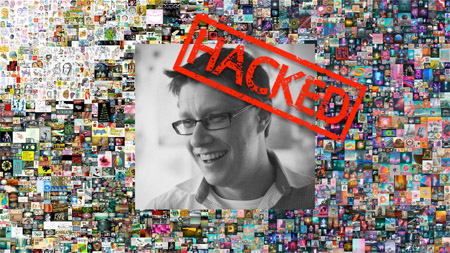
More news on the precarious nature of NFTs; the Twitter account of NFT king Beeple was hacked, leading to tens of thousands of dollars being lost by people who fell for the scammer's trick. In response, Beeple said, “Stay safe out there, anything too good to be true IS A F******G SCAM.” And well, he should know. More here.
Restitution and the V&A
June 7 2022
Video: V&A
The video above sets out the story of a gold ewer restituted to the Turkish government, apparently by the V&A museum; the video is on the V&A's website, and the V&A's director, Tristram Hunt, is at the handover ceremony. The ewer was acquired in 1989 from an antiquities dealer who, it has since been discovered, was up to no good, handling illegally excavated and exported items from Turkey. So far so commendable.
But, sharp-eyed restitution watchers among you will know that the V&A, much like the British Museum, has traditionally taken the line that it cannot deaccession such items (and especially not historicaly looted items), even if it wanted to; UK law prevents such it. Discussions with the Ethiopian government over items looted by British troops in the 19th Century, for example, have so far only discussed long term loans. For the V&A's own criteria on deaccessioning, see section 4.3 here.
So what's going on? Though the ewer appeared to be part of the V&A's collection, was shown in its galleries, and appeared on their website, it officially formed part of the Gilbert Collection, of works acquired by the late Sir Arthur Gilbert. The Collection originally had its own galleries in Somerset House, but struggled to make the finances work, and in 2009 the collection was 'incorporated' into the V&A. So technically the ewer could be returned.
Why is this interesting? Because I think it gives an insight into how some national museum directors, like Tristram Hunt, would handle restitution requests if the law was changed to allow them to do so. At the moment, the government's response in such cases is to say; 'it's up to museums', while museums say 'it's up to the government'. That at least is the British Museum's mantra. But I detect changes afoot, and hopefully directors like Tristram are working on more flexible procedures behind the scenes. We'll see.
'No reserves' at Christie's
June 7 2022
Picture: Christie's
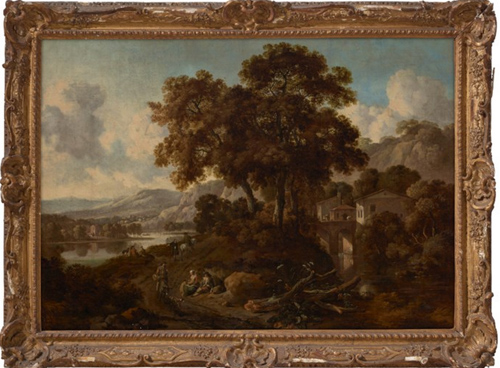
Christie's in New York has an interesting sale, of Old Masters online with 'no reserves'. Unreserved pictures - where the vendor is happy to get rid of the lot whatever it fetches - aren't unknown at auction, but there's rarely more than one or two in each sale (and even then, they're not trumpeted; I remember sitting in a Christie's sale in London about ten years ago when a really beautiful and large Philippe de Champaigne came up, estimated in the tens of thousands, and the bidding started at £500. I didn't have my wits about me fast enough to bid, and it only made a few thousand. I still regret it). In this sale there are 105 lots, all from different vendors, and I wonder how Christie's managed to persuade so many people to take the risk. Perhaps there was no choice.
But it's worth keeping an eye on the sale, if you're after a bargain. As things stand, you could assemble an entire collection of decent Old Master names for less than $5k. There's a perfectly nice Jan Wijnants landscape (above) estimated at $30k-$50k, currently selling at $1,700; a Daniel Mytens portrait of Sir Henry Hobart (est $20k-$30k) for $300; and an interesting small head study on panel, of the kind done in Rembrandt's studio by his pupils, attributed to Govaert Flinck currently at $400 (est $15k-$20k).
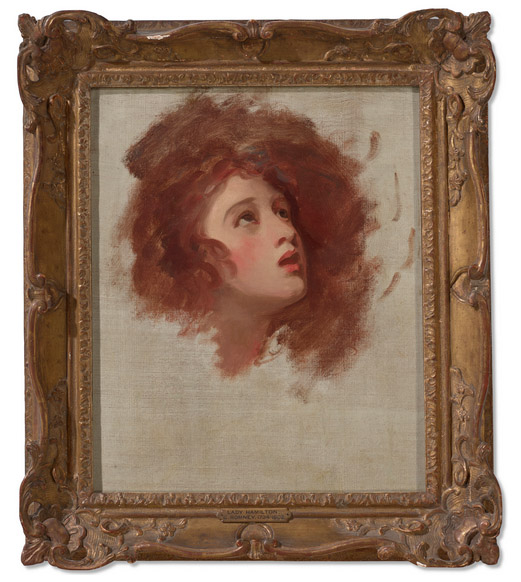
The picture I was most drawn to, an oil study catalogued as 'Circle of George Romney' has alas already gone some way over its estimate of $3k-$5k and is currently at $15k. I suspect this reflects the fact that it looks plausibly Romney-like, and though it's included in Alex Kidson's excellent new Romney catalogue raisonné as 'does not appear autograph' it seems he was writing when the picture was untraced (no.1736mm), and he had to judge it from an old black and white illustration in Herbert Maxwell's biography of Romney (where it is illustrated, p.105, as by Romney). If it is by Romney, it would be a repetition of a first version in the Philadelphia Museum of Art, which he sometimes did.
Good luck if you're bidding. It will be interesting to see how the sale does. In recent years, the bigger auction houses have stopped doing these lower value sales for Old Masters, since they were deemed not to be worth the cost of gathering, cataloguing, displaying and auctioning the pictures. But if the whole thing can now be done online, with no risk of lots failing to sell, then the economics presumably become more attractive. Personally, I think it's important for Sotheby's and Christie's to keep offering lower value paintings, as a way to develop the market for collectors, and so keep newer generations on a pathway to bid for the more valuable stuff. For this format to work best, however, they'll need to improve their digital offering, with better images, a slicker website (which works on tablets and phones), and something more than just basic catalogue text.
Update - in the end most things sold quite well, with only a handful of the 105 lots not making their initial lower estimate. The Wijnants made $44k, the Romney $37k. The sale total was $1.3m, which must represent quite a good return for Christie's, in terms of commission, without so many of the traditional costs of putting on such a sale.
Piero da Cosimo's fingerprints
June 7 2022
Video: National Gallery
Here's another nice video from the National Gallery's head of conservation, Larry Keith. He tells us about some conservation treatment on Piero da Cosimo's Satyr Mourning a Nymph, and reveals how the artist applied most of the blue sky with his fingers, leaving prints.
Apologies
June 6 2022
Not much on the blog today, it's too exciting, watching the Conservative Party attempt to defenestrate the PM. I'm cautiously optimistic he might lose. If not outright, then by a result which makes it clear he cannot continue. We'll find out at 9pm.
Update: Well that was a shame, he limps on. As Basil Fawlty says, it's the hope that gets you.
Monet's mega May
May 31 2022

Picture: Christie's
On the Live Art blog, Marion Maneker points out that in just one month, auction sales of paintings by Monet have achieved a record $310m:
More art by Claude Monet was sold in New York’s May sales than trades in even the biggest years for the artist. A full $310 million was traded for Monet paintings last month. That’s more than sold in 2019, a banner year for the artist. Though only a few of the works were bid above the estimates, one of the most prominent works sold in May was Anne Bass’s view of the Houses of Parliament (above) painted by Monet during a sojourn at the Savoy hotel in London during 1904. The Bass painting made $75.9 million.
The estimate for the Bass Monet was $40m-$60m. So what's going on? There seems to be a mini art boom happening. For NPR, Robert Griffiths looked at some of the recent prices, with a few comments from market observers (including me).
Tintoretto by Stanley Tucci
May 31 2022
Video: National Gallery of Art
Tintoretto died on this day in 1594, which gives me an opportunity to share this video from the National Gallery of Art in Washington DC about the artist. It's narrated by the great Stanley Tucci.
Go to bed with Frans Hals
May 31 2022

Picture: Muurmeesters
The Frans Hals Museum now sells large size reproductions of their works, profits of which go to support the museum. It all looks quite tastefully done, and certainly more worthwhile than selling NFTs. But then the Dutch just have innate good taste don't they. If you're interested, order here.
Sleeper alert
May 31 2022
Video: Dawson's Auctions
Art historian Michael Lobel has alerted me to a 'Follower of Filippino Lippi' Madonna which soared above estimate to make £255,000 hammer at a regional UK auction house. With trimmings that's around £300,000. The local paper the Maidenhead Advertiser has the story here, and the catalogue entry with images is here. The picture was once attributed to Dosso Dossi.
An interesting aspect of the sale is the auctioneer's reaction to it. They've made a video of the sale, above, where the bidding started at £3,000. Back in the day, if you bought a 'sleeper' (that is, a potentially mis-catalogued painting) you generally wanted it to remain dozing until you'd done all the research and conservation required to suggest a painting's new attribution. But these days, with social media and auction houses keen to publicise any high price, that's more or less impossible. News of your purchase can be round the world before you've even collected it. I suspect sometimes that might actually depress bidding, since most dealers don't want people to know so easily what they paid for something - that's why sleepers are such a prize, because they don't 'look up' on the art sale databases. So the true sleeper these days is essentially one which only you bid on, and which the rest of us may never know about. It doesn't happen often...
Why are portraits of the Queen so bad?
May 30 2022

Picture: Sunday Times
In the Sunday Times, the Great Waldemar looks back at the Queen's lifetime in portraits, and asks, why are they so bad?
The English monarchy has a decent record when it comes to commissioning paintings of itself. Henry VIII showed true perspicacity when he made Hans Holbein his court artist. It was Holbein who invented the extra-wide monarch without whom the Tudor industry of today would have had no monster to imagine. Elizabeth I may never have found a Holbein, but she did control a Tudor image machine that pumped out highly effective presentations of her as the Virgin Queen. Even as bad a king as George IV showed superior artistic taste when he got in Sir Thomas Lawrence to paint him.
The second Elizabeth has, alas, presided over a downturn in this story. Most of the painters she has turned to have come from that bleak institution: the Establishment School of Untalented Lackeys. The results have been bad likenesses or very uninteresting ones.
New Chair at ArtUK
May 30 2022

Picture: ArtUK
The British charity ArtUK, which, building on the work of the Public Catalogue Foundation, photographs and displays online digital images of every publicly owned oil painting and sculpture in the UK, is looking for a new Chair. It's a fantastic charity, the first of its kind in the world, and aims to connect the public to our fantastic national collections. I have benefited from it directly many times, as the first stage to finding discoveries made on the BBC programme I co-presented, Britain's Lost Masterpieces.
I note that in the job spec, there is this:
The successful candidate will be very familiar with the UK museum world and the visual arts scene and have a good understanding of the potential for digital to connect the public with the art they own.
Which indeed goes to the heart of ArtUK and all it does. There is one thing which I hope the new Chair might think about, however; British museums' adherence to an outdated model of selling images means ArtUK can only ever show lower resolution images, because museums restrict the size of image ArtUK can use. This means that using the ArtUK website will always be of limited use, because you can't truly enjoy the art.
And sadly, ArtUK doesn't challenge this model, but reinforces it. It recently submitted a report to the body aspiring to look again at how we promote our national collection which accepts image restrictions. And, by selling image licenses through its website, it directly profits from image fees, even for academic publications. I struggle to see how any of this fulfils the mission of 'digitally connecting the public with the art they own'.
The deadline is 1st June.
Mona Lisa caked
May 30 2022
Video: YouTube
Someone threw a cake at the Mona Lisa in the Louvre. Some sort of protest. She's behind bulletproof glass, so the cake came off worse. More here.
Update - I was on BBC News about this, though I can't link to it, because they don't archive news anymore. I'm afraid I only thought afterwards of saying she had been 'ambushed by cake'. One of the questions was what cake might the perpetrator have used, which of course I didn't know, but it gave me an opportunity to show off my knowledge of La Biscuit Joconde, a type of thin sponge made of almonds. It seems to have no connection to Leonardo, or Mona Lisa, but is thus called because French pastry chefs rate it so highly. I'd never heard of it before, but one of our Ukrainian guests made one on Sunday.
The Parthenon Marbles
May 27 2022

Picture: BG
When I went to the British Museum to see the new Stonehenge exhibition (cramped, and not really about Stonehenge), I looked in at the Parthenon Marbles. Many years ago, before I grew up, I used to think the Marbles should certainly stay in the British Museum. But now that I've changed my mind, I was struck by how different the Duveen Gallery (built to house them in 1938) felt as a space. Slightly oppressive (like so much classical architecture of the 1930s it feels like the sort of place Mussolini could stride through at any minute) and as an exercise in museum display, utterly hopeless. Most museums would have at least somewhere in the gallery a representation of the Parthenon itself, to show the connection between the Marbles and the structure from which they came. But evidently here it would serve as an obvious reminder that that is where they should always be. So there's no context. It's all slightly embarrassing.
It's also tempting to see the Gallery as a reflection of the contradictions which make up the modern British story. Where once we were so confident of our place in Europe that we effortlessly plundered it, now we have withdrawn from it. We have a government a little too deeply interested in the cultural and historical purity of Britain, and which wants to send at least the people who it thinks don't belong here back whence they came. But the Marbles, or the Bronzes, and everything else we stole from around the world? We'll keep all that, and just hope nobody notices.
Anyway, let me know what you think.
Update - a reader writes:
Thoughtful paragraph and thank you for sharing your opinion. I fully agree with you, the marbles that the 7th Earl of Elgin “bought” from the Ottoman guards, ( Greece was occupied by the Turks at the time) should be returned to the Acropolis museum.
Another adds:
I so very agree with your post just now. The Parthenon Marbles story joins a lot of other items in the multifarious soup of our imperial (and plundering) past….. there are constant awkwardnesses cropping up in the path but in all cases the need to - move on / acknowledge the overbearing behaviour / make amends - indicates that modern diplomacy and ‘right-thinking’ need to have their way.
Your 30’s museum display comments can also be expanded where the context of an item gets unnecessarily and unhelpfully obfuscated in a lot of circumstances.
The Times today reports on some remarks made by Stephen Fry at the Hay Festival, also urging the Marbles' return:
“It would be as if our Stonehenge and Big Ben and the Stone of Scone all in one had been missing from our country for hundreds of years and was finally returned to where it belonged,” Fry told the Hay Festival.
He said the return of the statues from Britain “would be an act that uses a word that we haven’t been able to use of Britain’s acts lately, much: it would be classy”.
Munch at The Courtauld
May 27 2022
Video: Courtauld
An exhibition of works by Edvard Munch has opened at the Courtauld Gallery in London, comprised of loans from the Kode art museum in Bergen, Norway. The show is part of a new partnership between the two institutions. In The Guardian, Jonathan Jones gives it five stars.
Bond's Picasso makes £17m
May 27 2022

Picture: The Times
A Picasso painting bought by Sir Sean Connery a few years before he died has made £17m at auction in Hong Kong. The proceeds will go to the Sean Connery Philanthropic Trust. I see from the catalogue entry that Christie's had guaranteed it, and that before the sale it was heralded as 'the most valuable work by Picasso to be offered in Asia'. All of which is an interesting reflection of where the market for these things is heading. More here from Stuart MacDonald in The Times.
AI does the Queen
May 27 2022

Picture: Guardian
A robot has painted a portrait of the Queen and as you'd expect it's not good. More from Harriet Sherwood in The Guardian here.
Raphael cartoons digitised (ctd.)
May 26 2022

Pictures: Factum Foundation / BG
Last year, Adam reported on the Factum Foundation making digital scans of the Raphael 'cartoons' at the V&A. The giant works on paper were all photographed in ultra high resolution, from which Factum could make their 3D printed facsimiles. Yesterday, I went to see the Raphael exhibition at the National Gallery, and got to see one of the facsimiles (Paul Preaching at Athens) up close, where it was hung beside the tapestry of the same scene on loan from the Vatican. And I've got to say it is an extroardinary recreation; even from inches away, in the dim light of the exhibition, you'd struggle to tell it was made last year. The surface texture is amazing, right down to the tears and ridges in the paper.

I've written before for The Art Newspaper on how such facsimiles will change the way we value and display artworks, especially contentious ones like the Parthenon Marbles.
