


Dingo deal done
November 6 2013

Picture: NMM/Nevill Keating Pictures Ltd
Congratulations to the National Maritime Museum for acquiring Stubbs' depictions of a kangaroo and a dingo. The pictures had been destined to Australia, but a £4.5m fundraising effort secured them for the UK. A fine victory over the Aussies in time for the Ashes. The Heritage Lottery Fund, the Art Fund, and the Monument Trust all contributed, along with a magnificent £1.5m donation from shipping magnate Eyal Ofer. Well done everyone.
More details here.
Update - a reader writes:
Regarding these two Stubbs paintings, for the first time ever, I was not completely in favour of paintings being saved for the UK.
As an expat Australian I believe that both countries have an equal cultural claim for the painting. It's a shame that something could not have been worked out for a shared acquisition.
Nonetheless it is great to have them on my doorstep in Greenwich, well done NMM.
Update II - a reader writes:
SO thrilled to hear about the Stubbs paintings. You might mention that it is strange, if the Australians thought them so important, that they never attempted to borrow them for an exhibition, even though they were very well known, and had been on display at Parham Park for decades.
Update III - a reader disagrees:
I disagree about the Stubbses tho. David Attenborough was one of my first heroes - 'Fabulous Animals' got me into art and monsters - but I think he's wrong here. The paintings have far more emotional appeal Down Under, and could get people into Stubbs who might otherwise never have thought of him.
Nazi loot extravaganza (ctd.)
November 5 2013
Video: BBC
Not only are the German authorities refusing to publish a list of the art found in that son-of-a-Nazi fellow's flat in Munich, but they've also lost track of him. Unglaublich.
Mind you, judging by the few photos released so far, there's a lot of truly terrible art there too. I wonder if some of it is a bit fake.
Mark Hudson in the Telegraph has a good article on German reluctance to return looted works.
Update - a reader writes:
[...] there must be more to that story. Some of the pictures do indeed look dreadful - and the conveniently round billion euro valuation is inherently suspicious.
I keep reading the phrase 'not previously known' when the press discusses this or that 'new' Matisse, Chagall, Dix etc., which makes me a little suspicious.
However, in Bloomberg, Catherine Hickley reports that many of the works were inventoried by the Alleis after the war, and returned to Gurlitt, the Nazi art dealer who first amassed the collection, in 1950:
A list of art compiled by U.S. troops in 1950 may help Jewish heirs identify works looted by the Nazis that wound up in a squalid Munich apartment, researchers from the Holocaust Art Restitution Project said.
U.S. troops vetted Hildebrand Gurlitt’s collection and missed a chance 63 years ago to seize the stash, which included works by Max Beckmann and Edgar Degas, according to a custody receipt that Marc Masurovsky and Willi Korte, researchers at HARP, found yesterday in the National Archive in Washington.
Their discovery includes a five-page list of artworks held by the allies and returned to Gurlitt in 1950. Prosecutors said they won’t publish an inventory of the 1,400 works seized in the Munich apartment of Cornelius Gurlitt, Hildebrand’s son. Groups representing the heirs of Jewish victims of Nazi persecution protested the secrecy.
“A great many people don’t know what is missing from their collections,” Wesley Fisher, Director of Research at the Conference on Jewish Material Claims Against Germany, said by telephone from New York. “This secrecy is not going to help families. Many of the items that clearly seem to have come from France may have been seized or lost in forced sales.”
Authorities seized Cornelius Gurlitt’s cache of more than 1,400 paintings, lithographs, drawings and prints as part of an investigation on suspicion of tax evasion in a three-day operation in March 2012. It took 1½ years to announce the hoard. Though refusing to provide a list of the works, they said it includes works by Beckmann, Pablo Picasso, Oskar Kokoschka, Franz Marc, Pierre-Auguste Renoir and Max Liebermann.
Update II - the Commission for Looted Art in Europe has published Hidebrand Gurlitt's interview with the allies, and a (much smaller) list of the pictures he had here.
Knox's plans for the Fitzwilliam - 'I want to make it sing'
November 5 2013

Picture: Fitzwilliam Museum
Exciting news from the Fitzwilliam Museum - after his first six months in the job, new director Tim Knox has published something of a manifesto for what he wants to see happen there. And it is good. Very good in fact. For example, some new building projects are announced, the Founder's Library will be opened, more works will be put on display and rescued from storage, the public will be able to see more of the Hamilton Kerr's conservation work, and, splendidly, photography will now be allowed. Knox says he wants 'to make the place sing'. You can read more details here.
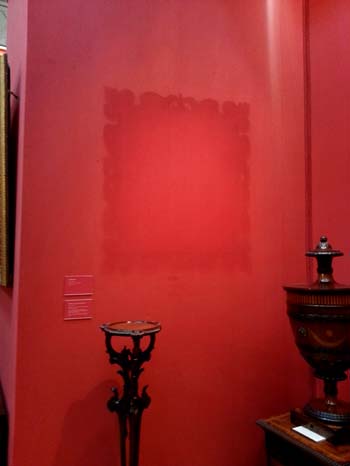
The Fitzwilliam certainly needed this breath of fresh air. In terms of the building, the museum has certainly become a bit tired, as the photo I took last year (below) shows. I hope also that some attention will be paid to the museum's labels, which used to be woefully uninformative.
Also, the Fitzwilliam allowing photography means that the National Gallery is just about the last major museum in the UK that doesn't permit it. Surely this must change soon?
Update - a reader writes:
Let’s hope not. The National Gallery is a sanctuary that saves people from themselves on this point.
I recently took a friend over from Italy round Tate Modern and the spectacle of some people photographing every painting, followed by its label, without really looking at either, was depressing.
Why are people more inclined to photograph life than live it these days? Is nothing worth doing unless somebody else can be made envious of it with photographic evidence?
Perhaps a better question to ask is, why do some people get so bothered about the way other people chose to look at art? Looking at art in different ways is part of the museum experience, isn't it?
Update II - the reader responds:
I suppose it comes from the same place as caring about whether people look at art at all – it’s an enjoyable (and maybe even edifying) thing to do, so our natural care and concern for other people leads us to want them to have that enjoyment too!
You may disagree with the underlying hypothesis that allowing photography makes people less likely to actually look at the pictures, but the ‘why are you bothered’ question is dealt with in exactly the same way as the question as why we think art galleries are a good idea in the first place.
Update III - the Grumpy Art Historian doesn't like Tim Knox's plans one bit.
Is this the end of the art market bubble?
November 5 2013
Picture: NYT
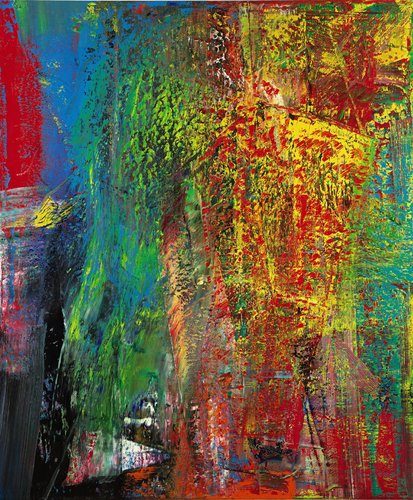
Over on Reuters, Felix Salmon sees the upcoming sales of one famous art collector, Steven Cohen, and wonders if his consigning recent purchases into auction signals an imminent collapse in the art market. In other words, Cohen's upcoming sales are evidence that the market is rising so fast, people can now 'flip' works to make a quick buck, even despite the art market's famously high transaction costs:
According to Carol Vogel and Peter Lattman in the NYT, Cohen is selling a Gerhard Richter [above] which he bought from the Pace Gallery last year, along with “about a dozen other pieces, mostly at Sotheby’s, that he acquired in recent years at art fairs and auctions”.
On top of Cohen’s works, Vogel has found other pieces being flipped this month, including Three Studies of Lucian Freud, by Francis Bacon, which “was purchased by a consortium from a private collector in Italy within the past 12 months”; and Apocalypse Now, by Christopher Wool, which was sold by David Ganek very recently. Between them, the Richter, the Bacon, and the Wool are going to account for a substantial percentage of the total amount of money spent at auction this season, which means that auction totals are increasingly comprised of short-term trades, as opposed to sales from individuals and families who have owned the objects for many years. [...]
It’s rare for people in the art world to buy a piece and then immediately consign it to auction. It’s common for works of art to be sold in the primary market for well below their auction value — but precisely because it is so common, there are lots of rules and protocols which mitigate against such things happening. When work is being sold at below-market rates, there’s naturally a lot of demand for it, which means that dealers can pick exactly which buyers they want. And if any buyer dares to flip such a work, he knows he’ll be blacklisted from then on in. Instead, if a buyer wants to sell a work he bought from a gallery, he always asks the gallery first.
Meanwhile, in other totally unrelated news, Mr Cohen's hedge fund SAC Capital has agreed to plead guilty to insider trading, and is to be fined a record $1.2 billion.
Canalettos return to Warwick Castle
November 4 2013

Picture: Adam Busiakiewicz
Here's a clever thing - Warwick Castle has borrowed, from Birmingham Museum, two Canalettos which used to hang at the castle. They were sold off 35 years ago when the 8th Earl of Warwick sold the castle to Madame Tussauds. Many of the pictures were sold seperately.
There was an outcry when the castle was sold to Tussauds, but on my visits there I've always found it well run, and busy. And it's good to see a (gasp) 'commercial' owner taking an interest in such things as 18th Century landscape art. The pictures are on display throughout November. In the picture above, former Warwick Castle employee Adam Busiakiewicz, whose idea the loan was, admires Canaletto's Warwick Castle, the East Front, (which, the ArtFund website tells me, was bought by Birmingham Museum for £275,000 in 1978).
Daumier at the RA
November 4 2013

Picture: Observer
The new Honore Daumier exhibition at the RA seems to be going down well. Waldemar liked it, as did Laura Cumming in the Observer. Alastair Smart wasn't so keen though in the Telegraph, and gave it just two stars. There's a video about the show here.
Installing Samuel Cooper
November 4 2013

Picture: BG
Great excitement here at Philip Mould & Co. as we begin to install our Samuel Cooper exhibition.
The photo above shows the first completed case. In case you're interested, installing five miniatures takes well over an hour. Each one has to be carefully checked, and then pinned into place with special plastic covered pins. The fabric on which they will rest has been 'Oddy tested' to make sure it isn't toxic for any aspect of the miniature or its frame, and the board behind the fabric, made of Plastazote, is also free of any harmful chemicals. The base of the specially constructed, reinforced glass and steel case has been filled with Artsorb to keep the humidity at a steady 50%. Things you can't see in the photo include humidifiers, light meters, and two ex-army security guards. These are just some of the things you need to think of when exhibiting museum items like this.
The exhibition opens on 13th November, and runs till 7th December. Attendance is of course compulsory for all AHN readers.
Nazi loot extravaganza
November 4 2013

Picture: Focus
Up to 1500 artworks, from Durer to Picasso, stolen by the Nazis and lost since the war have been found in a flat in Munich. From The Guardian:
The works, which would originally have been confiscated as "degenerate art" by the Nazis or taken from Jewish collectors in the 1930s and 1940s, had made their way into the hands of a German art collector, Hildebrand Gurlitt. When Gurlitt died, the artworks were passed down to his son, Cornelius – all without the knowledge of the authorities.
Gurlitt, who had not previously been on the radar of the police, attracted the attention of the customs authorities only after a random cash check during a train journey from Switzerland to Munich in 2010, according to Focus. Further police investigations led to a raid on Gurlitt's flat in Schwabing in spring 2011. Police discovered a vast collection of masterpieces by some of the world's greatest artists.
The artworks are thought to have been stored amid juice cartons and tins of food on homemade shelves in a darkened room. Since their seizure, they have been stored in a safe customs building outside Munich, where the art historian Meike Hoffmann, from Berlin university, has been assessing their precise origin and value. When contacted by the Guardian, Hoffmann said she was under an obligation to maintain secrecy and would not be able to comment on the Focus report until Monday.
Very weird that the German police have know about this since 2011, but have not made a squeak since. You can see the original story in Focus, in German, here. You can see Godfrey Barker discuss the discovery here, and a shot of the unassuming flat where the pictures were found here. There's an ecellent interview with Anne Webber from the Commission for Looted Art in Europe on the Today programme here, at 1hr 22 mins in. Anne rightly says that the police's two and half year delay in publishing the list of looted pictures is almost as big a story as the discovery itself. She says that there is a 'culture of secrecy' in that part of Germany when it comes to Nazi loot. Munich, of course, was where the Nazi party began.
Update - a reader writes:
What one wonders of course is precisely what was going on with that trove of art.
The non owner who has held it is a recluse but realized about USD 1.2 million from one sale in recent years. More than he appears to spend in a decade. And there were other sales.
Was this being held to finance a nefarious purpose or is that just a plot for the next Michael Fassbender film.
Of course perhaps it is just further proof to the remaining deniers of what happened in Europe seventy years ago.
Update II - Catherine Hickley has more information at Bloomberg:
A stash of art uncovered in a Munich apartment in 2012 included top quality works that were previously unknown, among them a self-portrait by Otto Dix, said Meike Hoffmann, an art historian investigating the hoard.
The cache of almost 1,500 paintings, lithographs, drawings and prints included works by Max Beckmann, Henri de Toulouse-Lautrec, Pablo Picasso, Marc Chagall, Oskar Kokoschka, Franz Marc, Pierre Auguste Renoir and Max Liebermann, said Siegfried Kloeble of the Munich customs authorities. Some of the art dates back as far as the 16th century. It was stored correctly and in good condition, Hoffmann said.
Some works were seized by the Nazis from German museums -- others may have been sold by Jewish families under duress, Hoffmann said. Reinhard Nemetz, the chief prosecutor in Augsburg, said authorities won’t publish a list of the artworks online.
“The legal situation of the artworks is very complex,” Nemetz said at a news conference today in Augsburg. “We don’t want a situation where there are 10 claims for one painting.”
This last statement is completely bonkers. It just sounds as if Herr Nemetz can't be bothered to return these pictures to their rightful owners.
Sleeper Alert
October 31 2013

Picture: Bonhams
This 'Circle of Francesco Albani, Hercules Resting' made £254,500 at auction yesterday in London, against a £3,000-£5,000 estimate. I saw it at the view, and thought it was quite good, but had no idea who it's by. One for my bulging 'Sleepers I have missed' file.
Update - two readers say Carracci, one Annibale and the other Agostino.
Update II - another reader writes:
It's a new Leonardo!!!!!!! Well, what the heck, why not join the crowd?
Update III - a sleuthing reader notes the connection with this drawing by Annibale Carracci, sold at Sotheby's New York in 1998 for £73,000. Note the difference between the position of the hand. Well done readers - case solved?

Update IV - another reader writes:
Don't wish to teach granny how to suck eggs… but re. your Hercules item: a high price against a low estimate surely does not necessarily mean it's a sleeper. In this particular instance I would call it "speccy alert". As we all know, many of them just die a slow and painful death… with bitter and twisted buyers.
The real sleeper is the one that just 'walks out' of the saleroom - largely unnoticed.
Not art history...
October 30 2013
...but definitely worth a click. It shows the moment a concert pianist realises she's been preparing for the wrong concerto, and has no music for the right one. And then, something amazing happens.
'China's broken art market'
October 29 2013
Fascinating article in the New York Times on how the Chinese art market isn't all it seems. Fraud, non-payment, forgery and bribery are all reasons to disbelieve much of what you see.
Sleeper Alert
October 29 2013

Picture: ATG
The Antiques Trade Gazette reports that the above picture made £240,000 at a Lyon & Turnbull sale in Edinburgh sale last week, against a £8,000-£12,000 estimate. It was catalogued as by a 16th Century follower of Dieric Bouts, who painted this very similar composition in the Staatliche Museum in Berlin.
An idea about the Royal Collection
October 29 2013

Picture: Royal.gov.uk
Lord Adonis, the former Labour Cabinet minister, wrote an article in The Times last week about the Royal Collection. He was uncomfortable with the fact that so much of the collection is out of sight from the public. His 'serious proposal' was to turn St James' Palace into a permanent gallery for the collection.
It's not a new idea, and has been doing the rounds for some years. I remember someone authoritative telling me, years ago, that an early gesture in any reign of Charles III would involve something like this. The question is perhaps (to be conspiratorial) this - why is Adonis writing an opinion piece in the Times on the matter, and why is he doing it now? Is someone trying to float the idea?
If so, then good luck to them. St James' Palace is used for royal functions and the offices of Princes William and Harry, but it is not a place of residence. It probably could be turned into a gallery to show more of the Royal Collection. The Queen's Gallery is a wonderful place for exhibitions, but too small for anything beyond a temporary hang.
The trick with any larger space for the Royal Collection will be to accept that the collection is primarily a working one, one that is by definition dispersed among royal palaces (including non-residential palaces like Hampton Court) not just to decorate but to form part of historical settings often centuries old. So by all means have more space to display the Royal Collection. But don't turn it into a static display which changes the whole purpose of the Royal Collection.
Hasan Niyazi
October 29 2013

Picture: 3PP
Hasan Niyazi, whom many readers will know from Twitter and his blog, Three Pipe Problem, has died. Hasan was a major part of the online art historical world, and art history has lost one of its most spirited champions. Coming from a clinical and medical background, he wrote about art (and in particular his favourite artist, Raphael) with a refreshing clarity and vision. His main aim was to open up art history to a wider audience. He disliked, and saw as uncomfortably elitist, much of the old language, methodology and structure of art history. Perhaps understandably, coming from a scientific background, he hoped to make art history a little more certain than it is, with a greater focus on consensus among experts, and properly tested evidence. That is to say, not attributional hunches and connoisseurial reactions.
An early reader of AHN, Hasan was always ready with a kind email of praise, and occasionally a probing Tweet of criticism. Sadly, we had a minor spat over connoisseurship last year. I don't think he was a fan of the concept, and saw it as too unscientific, especially in relation to pictures like Raphael's Madonna of the Pinks. But our disagreement was only a reflection of Hasan's passion for the wider subject, and we remained in touch.
Of course, he was entirely right to want to find a more certain, scientific way to attribute paintings. The only question is whether it can be done. I suspect it probably can be, one day, and then the likes of Hasan will justly be seen as pioneering advocates for a new approach to art history. I found an email from him which I think sums up his approach. Writing about a discussion he had with a Raphael scholar, he related that:
[...] he had a good chuckle when I asked him "will art history ever free itself from the need to debate attributions" - he seemed to think the passionate debate was part of the fun - which I can understand to an extent - though my science training does think it a bit odd.
Aside from his writings on Three Pipe Problem, Hasan's best online legacy will doubtless be the (sadly unfinished) 'Open Raphael' project, an invaluable reference point for information on every painting Raphael made. I'm sad not to have eventually met someone that dedicated to art history. He was just 37 when he died (the same age as Raphael).
You can find tributes to Hasan from Monica Bowen (aka Alberti's Widow) here, David Packwood (Art History Today) here, Francis Stefano (Giorgione et al) here, and from Dr Ben Harvey here.
Sotheby's sued over Winslow Homer ownership
October 29 2013

Picture: Standard
The Evening Standard reports that Sotheby's are being sued over the ownership of a watercolour by Winslow Homer (above). Regular readers may remember the picture from our BBC1 programme 'Fake or Fortune?' Sotheby's has been holding onto the painting ever since 2009, when two families claimed owneship, and are now being taken to court by a descendant of the sitters in the painting, Shirley Rountree.
To recap quickly: the painting was allegedly found on a rubbish tip in Ireland about 25 years ago by a man going fishing; he then gave it to his daughter, who took it onto the Antiques Roadshow; the picture was then researched by us for 'Fake or Fortune?', and we established the identity of the sitters, who were the children of the Governor of the Bahamas, Sir Henry Blake. The daughter then decided to sell the painting at Sotheby's New York; but just an hour before the sale, Sotheby's said they had a rival claim of ownership, from Mrs Rountree, who said the picture had been stolen from her house all those years ago.
It all made for dramatic telly, but since then Sotheby's have kept hold of the painting, being unsure who to give it back to. And now they're being sued by Mrs Rountree, who says the picture is hers. There was never, however, any record of the picture being stolen. So part of the problem was that nobody could yet definitively prove ownership.
Apologies... (ctd.)
October 29 2013
Sorry for the lack of posts yesterday. I was doing a voiceover. I'll try and post some news later today in my lunch break.
Voiceovers, in case you're interested, are trickier than you think. Not only does your voice have to compete with the image on screen, but it also has to convey the right emotion for the subject at hand. Warmth, intrigue, sadness, optimism - easy if you went to RADA, but not for your average art dealer. Try too hard and you sound like Jeremy Clarkson, take it too easy and you just sound dull.
Test your connoisseurship
October 25 2013

We haven't had one of these for a while. So, can you tell who painted this? Find the answer below by clicking 'read on'.
Update - a reader writes:
For your Connoisseurship puzzles, no more ' read on ' links, please.
It spoils the fun. I'm sure others feel the same way.
And with Google and Bing all your followers can chase down any bright ideas they might come up with.
And learn more, and possibly find clues to their own research...
Another reader writes:
Unusually easy that one for you.
The Baptism of Christ by Veronese, c.1580-8, J. Paul Getty Museum, California.
Top marks if you got it!
Suing the Met (ctd.)
October 25 2013

Picture: Metropolitan Museum
I reported a while ago on the attempt to sue the Met in New York over its admission policy. (To recap, some chancers are trying to get a multi-million dollar class action suit against the museum.) Yesterday, the Met announced it has signed an amendment to its lease with New York City, so that in future there is no doubt about what it can and cannot charge. AP reports:
The Metropolitan Museum of Art says it has signed an amendment to its lease with New York City that confirms the museum can set its own admission fees.
The amendment comes as the museum faces lawsuits filed earlier this year that accuse the Met of fooling visitors into thinking they have to pay.
The museum says a policy requiring visitors to pay at least something has been around for four decades, and the amendment codifies it in the lease and also gives the museum the ability to consider any other price modifications it might need in the future.
A lawyer for the museum visitors who sued said Thursday the change is actually an admission that the museum didn't have the authority to charge fees over those years.
I am not on Facebook
October 24 2013
Weirdly, someone has set up a Facebook page for Bendor Grosvenor. It used to be illustrated with a photo of me taken sneakily at night, through the gallery window here at Philip Mould & Co. Weirder still. Who would want to do such a thing? The trouble is, I don't want to be on Facebook. Does anyone know how to get my imposter removed?
Still, at least I know 44 people 'like' 'me'. Woo.
